
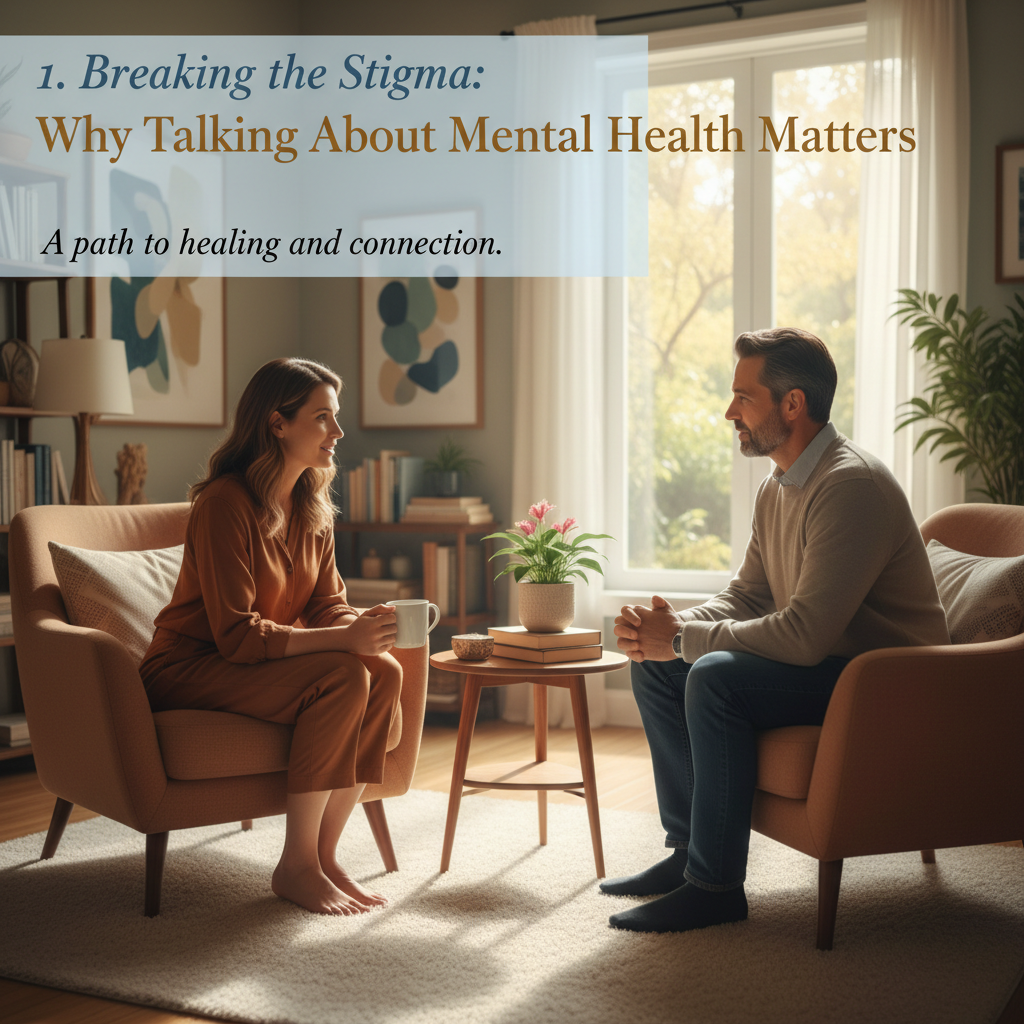
Breaking the Stigma: Why Talking About Mental Health Matters
Have you ever found yourself nodding along when a friend shares a tale of physical illness – a nasty flu, a broken bone, or even a chronic condition – offering words of sympathy and support without a second thought?
Now, imagine that same friend confiding in you about their crippling anxiety, the persistent cloud of depression, or the overwhelming stress that’s making daily life feel impossible. Would your reaction be the same?
Unfortunately, for many, the answer is often no. Silence, discomfort, or even judgment can creep into conversations about mental health, creating a barrier that prevents millions from seeking the help they need. This barrier is what we call stigma.
At CBTHeal.com, we believe that open, honest conversations are the first critical step toward healing and well-being. Today, we’re diving deep into why talking about mental health isn’t just helpful, but absolutely essential.
Understanding the Silence: The Psychological Impact of Stigma
How Unhelpful Thoughts Fuel Mental Health Stigma
From a Cognitive Behavioral Therapy (CBT) perspective, stigma isn’t just an external societal problem; it’s often reinforced by unhelpful thought patterns, both in those who experience mental health challenges and in those around them.
When someone struggles with their mental health, automatic negative thoughts (ANTs) often whisper messages like, “I’m weak,” “I’m broken,” or “No one will understand.” These thoughts lead to avoidance behaviors – avoiding discussions, avoiding seeking help, and isolating oneself.
Similarly, societal stigma can be traced back to core beliefs and automatic thoughts. For example, the belief that “mental illness is a sign of personal failure” or “talking about feelings is a weakness” generates negative emotional responses (like fear or discomfort) and behavioral responses (like avoidance or judgment) when mental health is discussed.
CBT teaches us that challenging these unhelpful thoughts, both individually and collectively, is key. By examining the evidence for and against these beliefs, and by practicing more adaptive responses, we can begin to dismantle the structure of stigma.
Imagine the relief when a deeply held, shame-inducing thought like “I’m the only one who feels this way” is replaced by the compassionate realization that many others share similar struggles.
Real-Life Application: Breaking the Silence in Your Daily Life
Practical Steps to Talk Openly About Mental Health
Bringing mental health into everyday conversations doesn’t require a psychology degree; it requires courage, empathy, and a willingness to be vulnerable. Here are some CBT-inspired ways to start:
- Practice Self-Disclosure (When Ready): If you’re struggling, consider sharing your experience with a trusted friend or family member. Start small. Perhaps, “I’ve been feeling particularly stressed lately, and it’s making it hard to focus.” Observe their reaction. This can challenge your inner critic’s thought that “they won’t care” or “they’ll judge me.”
- Ask Open-Ended Questions: Instead of “Are you okay?”, try “How have you *really* been doing lately?” or “It seems like you’ve had a lot on your plate; how are you managing?” This invites a deeper conversation.
- Validate Feelings: When someone confides in you, respond with empathy. Phrases like, “It sounds like you’re going through a lot right now,” or “That must be incredibly difficult,” can be powerful. Avoid minimizing their experience with “just snap out of it” or “it could be worse.”
- Educate Yourself: Learning more about anxiety, depression, stress, and other mental health conditions can help you challenge misconceptions and reduce fear. The more you know, the less foreign and frightening these topics become.
- Challenge “Should” Statements: Notice if you or others use “should” statements about mental health, such as “I *should* be able to handle this on my own” or “He *shouldn’t* be so upset.” These rigid thoughts often fuel shame and prevent honest communication. Reframe them: “It’s understandable to need support when facing a challenge” or “It’s okay for him to feel his emotions.”
Reflection Prompt:
Think about a time you hesitated to talk about your mental well-being or worried about someone else’s. What unhelpful thoughts or fears came to mind? How might challenging those thoughts have changed the outcome?
A Therapist’s Perspective: The Power of Normalization
Myth-Busting: “You Are Not Alone, And You Are Not Broken”
As a CBT therapist, one of the most profound moments in a session is when a client realizes they are not alone in their struggle. Society often paints a picture of mental health challenges as rare, severe, or shameful abnormalities. The reality is vastly different.
Myth: Mental health challenges are rare and affect only a small percentage of the population.
Reality: Mental health conditions are incredibly common. According to the National Alliance on Mental Illness (NAMI), 1 in 5 U.S. adults experience mental illness each year. That’s millions of people who are navigating similar internal battles.
Myth: Talking about mental health will make things worse or make you seem weak.
Reality: Research consistently shows that seeking help and talking openly leads to significantly better outcomes. It’s a sign of strength and self-awareness, leading to problem-solving, support, and profound relief. Suppressing emotions and struggles often leads to increased distress and even physical symptoms.
My clinical experience repeatedly reinforces that speaking about your mental health is a foundational step in your healing journey. It allows us to apply CBT techniques – identifying cognitive distortions, developing coping skills, and restructuring core beliefs – in a collaborative, non-judgmental space.
When you share, you give voice to your experience, allowing it to be seen, acknowledged, and, crucially, worked on. It’s akin to shining a light into a dark room – the “monsters” often shrink when exposed.
Moreover, when we talk, we normalize these experiences for others. Every conversation chips away at the walls of stigma, making it easier for the next person to seek help.
Embrace the Conversation, Embrace Your Well-being
Breaking the stigma surrounding mental health isn’t a quick fix; it’s an ongoing process that requires collective effort, empathy, and courage. But every conversation, every moment of vulnerability, every act of support makes a difference.
Understanding that mental health is just as important as physical health, and that struggles are a normal part of the human experience, is the key to unlocking a healthier, more compassionate society.
Don’t let unhelpful thoughts about weakness or judgment stop you from seeking support or offering it to others. Your mental well-being matters, and so does the well-being of those around you.
If you’re ready to start your own conversation, to explore the thoughts and feelings holding you back, or to develop strategies for managing anxiety and stress, we’re here to help.
Thank you for being part of the movement to break the stigma. Together, we can create a world where mental health is openly discussed, understood, and supported.